
Written by Ali Carlson
Theater has always been described as an escape. For some, it’s a hobby. For others, it’s entertainment. But for many people, the stage becomes something much deeper – a place of healing, belonging, and survival.
I didn’t fully understand the connection between theater and mental health until I saw what happened when the lights came up. People who struggled to speak suddenly found confidence. Anxiety softened. Friendships formed. For a few hours each night, people felt seen.
Being part of Abrams Spotlight Productions for the last 15 years has opened my eyes to just how important theater has been in my own mental health journey – and in the lives of so many others.
When I first moved to the tiny town of Little Suamico with my husband many years ago, I wondered how I was ever going to find connection here. I had grown up surrounded by theater and the arts, and I knew creative expression was an important part of who I was. But how was I supposed to continue that in a small rural town?
It all changed one day when I attended a local farmers market on a whim.
ASPI had a booth there promoting the theater, and like so many others, I had no idea it even existed. That’s the beauty of Abrams Spotlight Productions. We’re so small that many people don’t realize we’re here – but that’s also our strength. Small but mighty, as I like to say.
I immediately grabbed information and prepared to audition for my first show: Seussical the Musical – the first time ASPI had produced it. I was excited, but nervous. I hadn’t performed in years, especially not singing. Dancing had always been my background, but singing solos? That was completely outside my comfort zone.
Still, I knew I needed something.
My story is not very different from many others. The overwhelming feelings of loneliness and isolation are growing in a society that becomes more digitally focused every day. This is especially true for people who work from home. Without offices, coworkers, and regular face-to-face interaction, many people slowly lose the human connection they don’t even realize they need.
Recent studies have shown that loneliness and social isolation are becoming a major public health concern. In fact, the U.S. Surgeon General reported that lacking social connection can be as harmful to health as smoking several cigarettes a day. That statistic is staggering – but it also explains why community spaces like theater matter so deeply. Theater creates something many adults are missing: genuine human connection. It gives people a place to be seen, heard, valued, and supported in a world that often feels increasingly disconnected.
And adults, especially, struggle with this.
As children, we are encouraged to participate in sports, dance, clubs, music, and activities that naturally create community. But as adults, conversations about loneliness, anxiety, depression, and isolation are often pushed aside. Society does not always encourage adults to openly express those emotions or seek meaningful connection.
That is why theater is so important for mental health.
And I truly believe it is important for everyone.
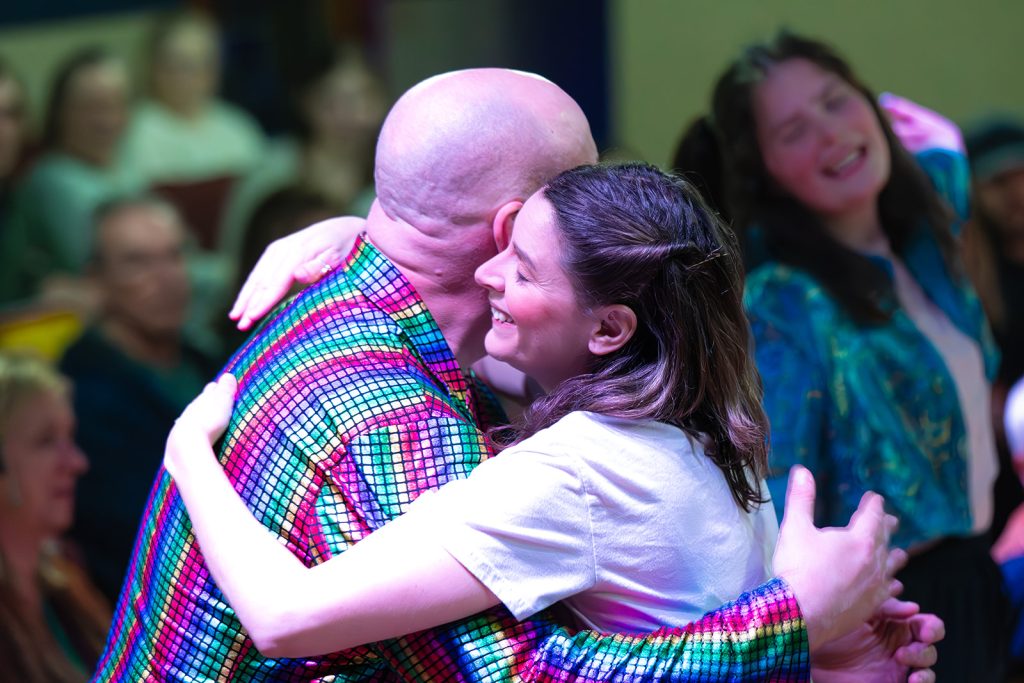
Every single production I’ve been part of – whether I was performing on stage, choreographing, or directing – I have witnessed the direct impact theater has on cast and crew members. People come alive. Friendships form quickly. Confidence grows. By the end of a production, we become family.
One of the most beautiful parts of theater is that people from completely different backgrounds, cultures, ages, and experiences all come together with one common goal: human connection.
And it’s not just the performers who experience it.
I see it in the audience too.
I love watching children sit in their seats before the curtain rises, unsure what to expect. Maybe they’re mostly excited about the popcorn their parents promised them. Maybe it’s their very first live show. Then the lights go up – and suddenly, everything changes.
Their faces light up.
They laugh, they gasp, they become completely immersed in the magic unfolding in front of them. And afterward, when they get to meet the actors, take photos, and collect autographs, something even more special happens: they want to come back.
They sign up for theater camps. They audition for future productions. They begin building friendships and finding confidence within themselves.
Not every child is a sports kid. Not every child fits naturally into traditional leadership roles at school. Theater gives those kids a place to belong. It gives them a voice, a creative outlet, and a community.
And honestly, our society desperately needs more of that.
So what is your journey?
Are you searching for connection? Struggling with isolation, anxiety, or periods of depression? Maybe theater is something worth trying.
Whether you support the arts financially, volunteer behind the scenes, help build sets, work backstage, or step into the spotlight yourself, community theater matters. These spaces matter.
Because without opportunities like theater, those human connections slowly begin to disappear – and those connections may be more important to our mental health than we realize.